A Guide to Shutter Panels
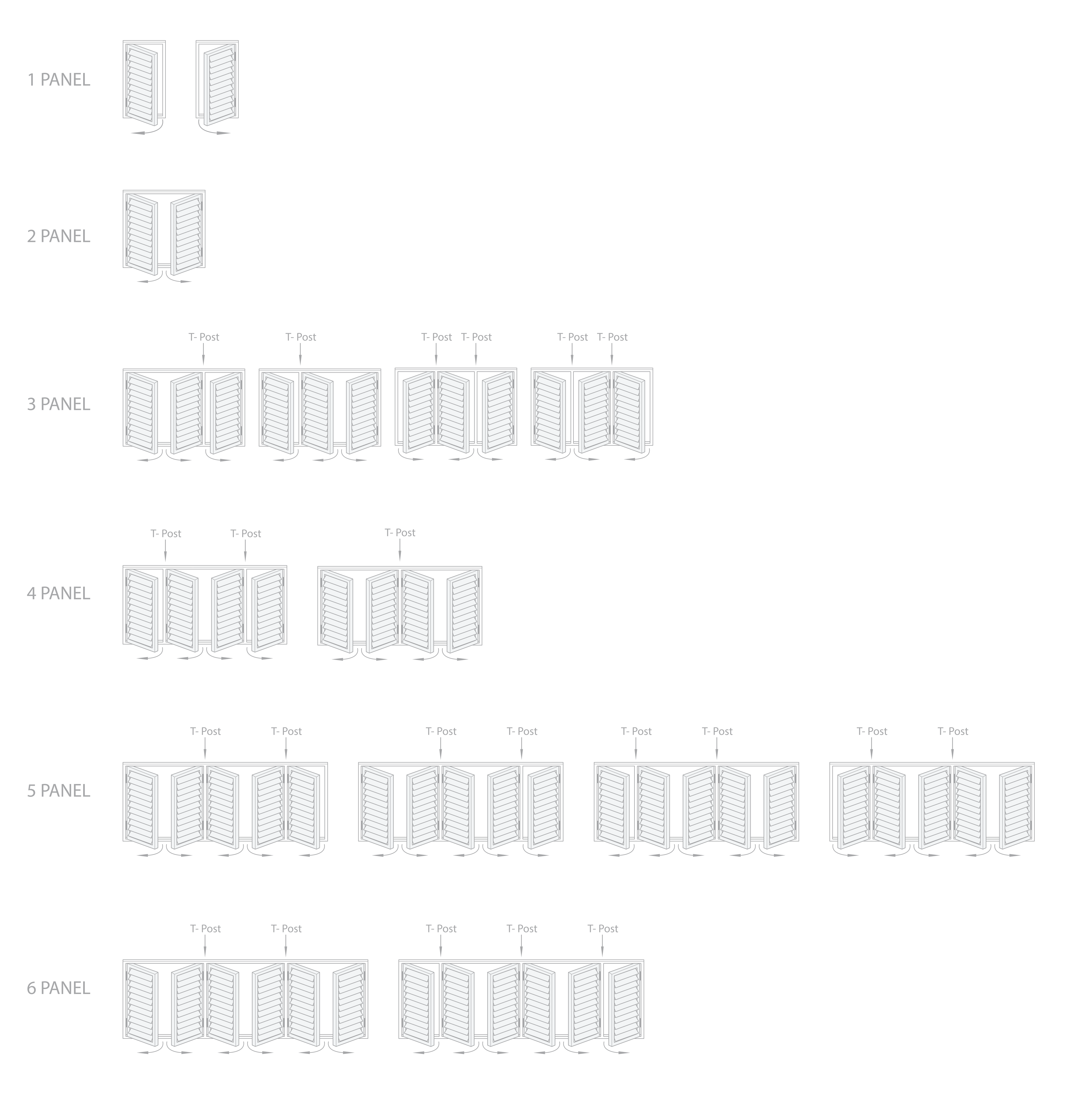
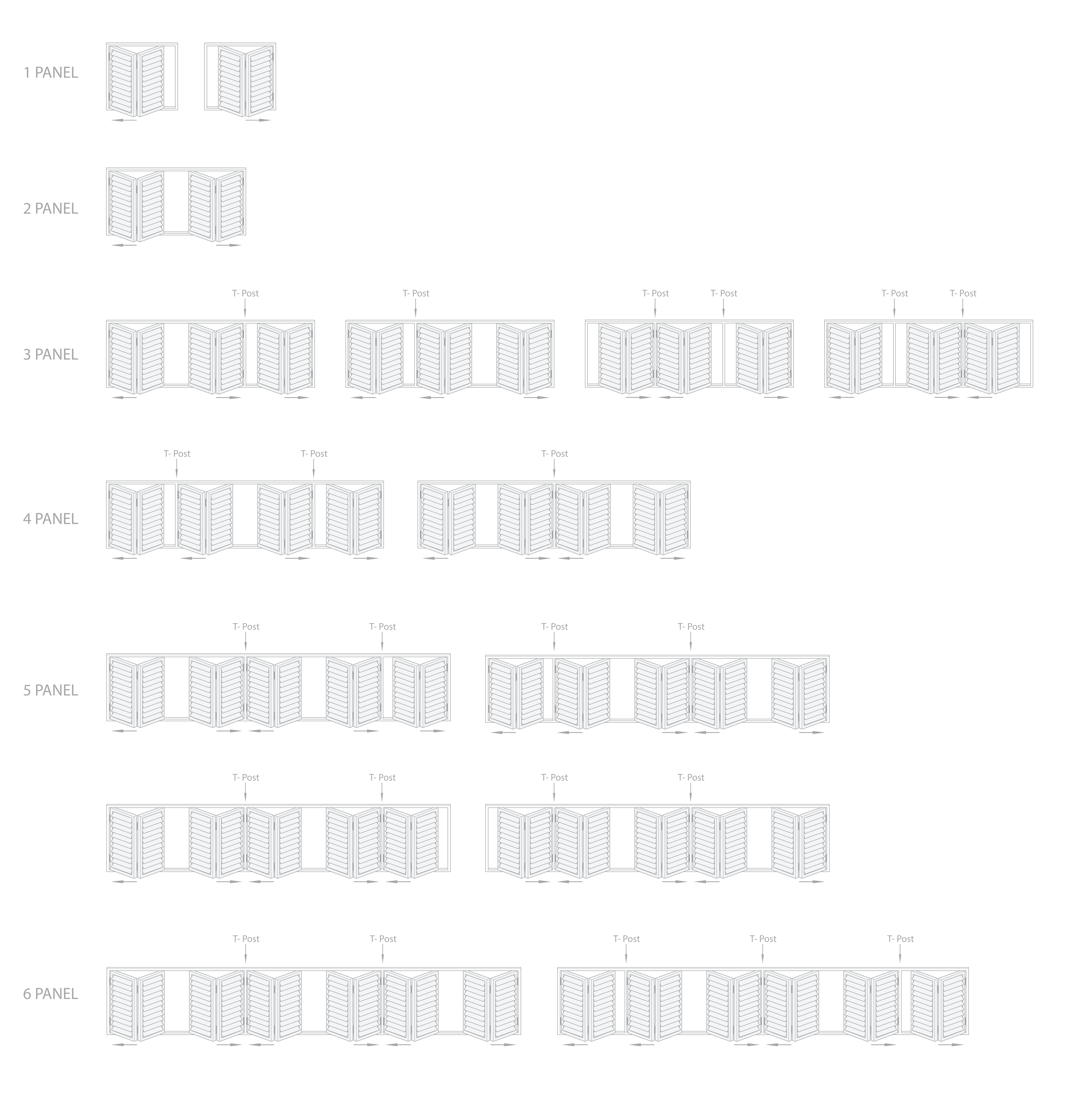
A plantation shutter is divided into one or more hinged panels. The number of panels influences the finished look of the shutter, how it opens and where the vertical panel lines sit in relation to the window.
Wider windows require multiple panels so that each panel remains inside the permitted manufacturing width. As a general design rule, our trade team recommends aligning shutter panel divisions with the main vertical sections of your existing window wherever workable.
How will my panels be configured?
A single panel can be hinged from the left or right. With two panels that meet together, the meeting edge is shaped to create a neat overlap and reduce the visible gap between them.
Another option is a T-post, a fixed vertical member between panels. T-posts can be useful when you want the shutter divisions to line up with a vertical mullion in the window or when the overall width needs additional support.
Click to view expanded panel layout images.
How many panels?
The correct number is mainly determined by the window width and the maximum permitted panel size, but finished look matters too. Fewer, wider panels can reduce vertical lines, while tall windows can sometimes look more balanced with narrower panels.
When ordering several shutters, inspect the original window layout instead of treating each opening as a blank rectangle. Matching the shutter divisions to the window often produces the most integrated result.
Did this answer the job question?
Related articles
Need trade support?
Send our trade team the window opening dimensions and photos if anything is unclear about the right shutter setup.