A Guide to Architraves
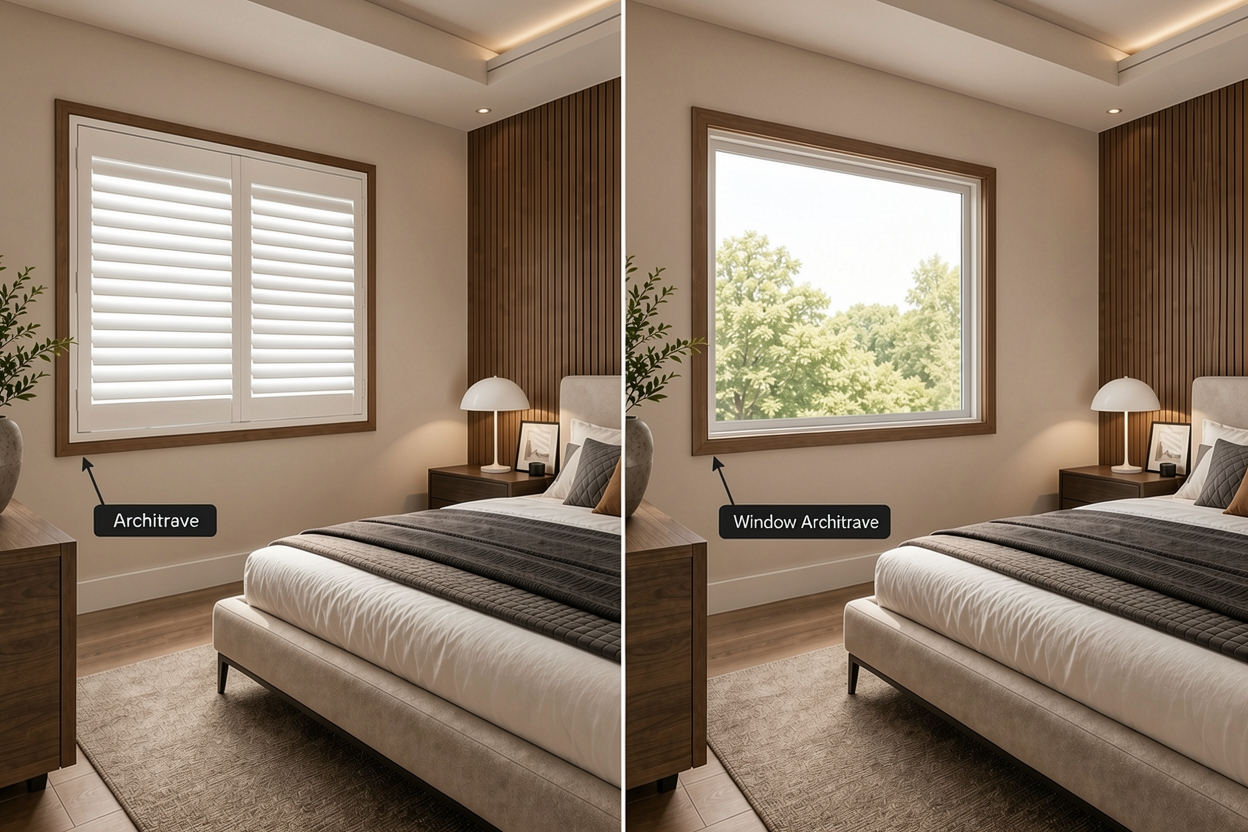
An architrave is the trim that frames the inside of a window or doorway. For plantation shutters, its shape matters because it can influence whether the shutter is fitted inside the recess or mounted onto the front of the trim.
What is an architrave?
Architraves provide a finished border around a window and conceal the joint where the window opening meets the wall lining. Not every window has one, but where an architrave is present its shape and available flat surface should be checked before selecting the shutter frame.
What kind of architrave do I have?
For shutter planning, most architraves can be grouped into three workable categories.
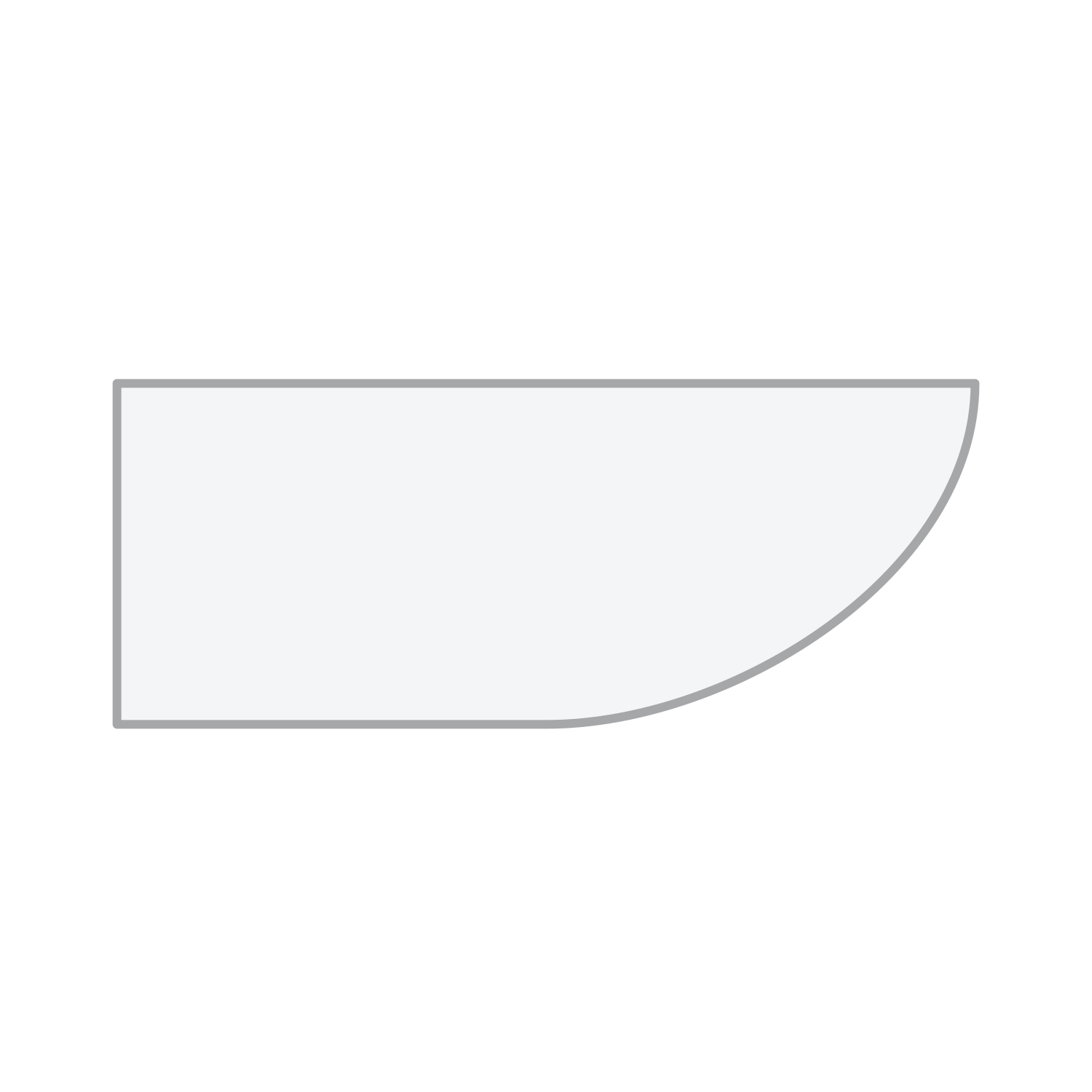
Bullnose architrave
A bullnose architrave has a relatively flat front face with a rounded outer edge. It typically works well with both inside and outside shutter mounting where sufficient clear surface is available.
Decorative architrave
Decorative trim incorporates grooves, steps or moulded profiles. An inside L-frame can be especially useful because it leaves the decorative front face visible.
Square architrave
A square architrave has straight edges and a broad flat face. Its clear shape makes it one of the easiest architraves to work with for shutter installation.
How does each frame type work with an architrave?
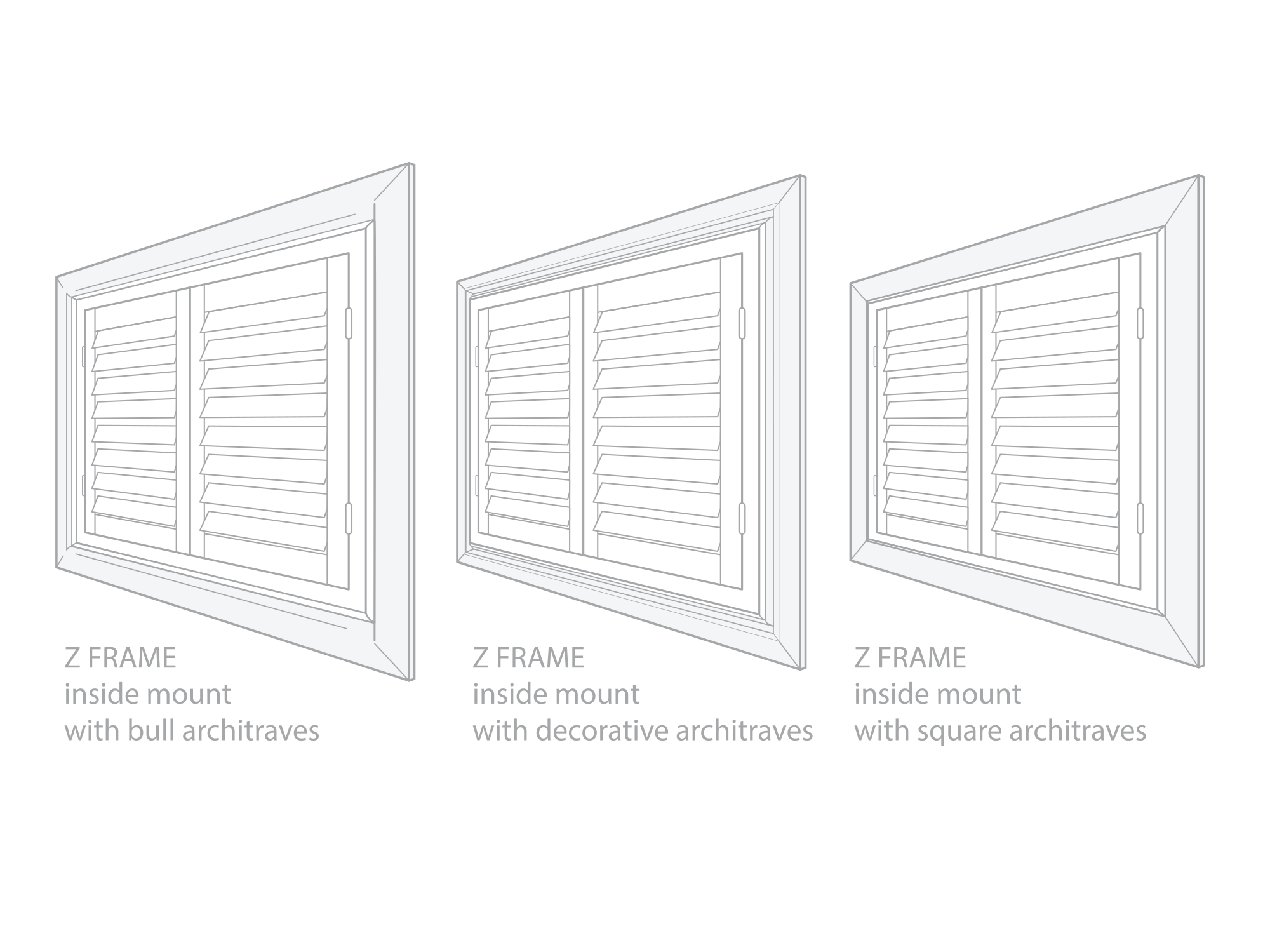
Z-frame with architraves
A Z-frame sits inside the recess and overlaps the front edge of the opening. It works especially neatly with square and bullnose trim. With decorative architraves, check where the lip will land so it doesn’t cover a moulded detail.
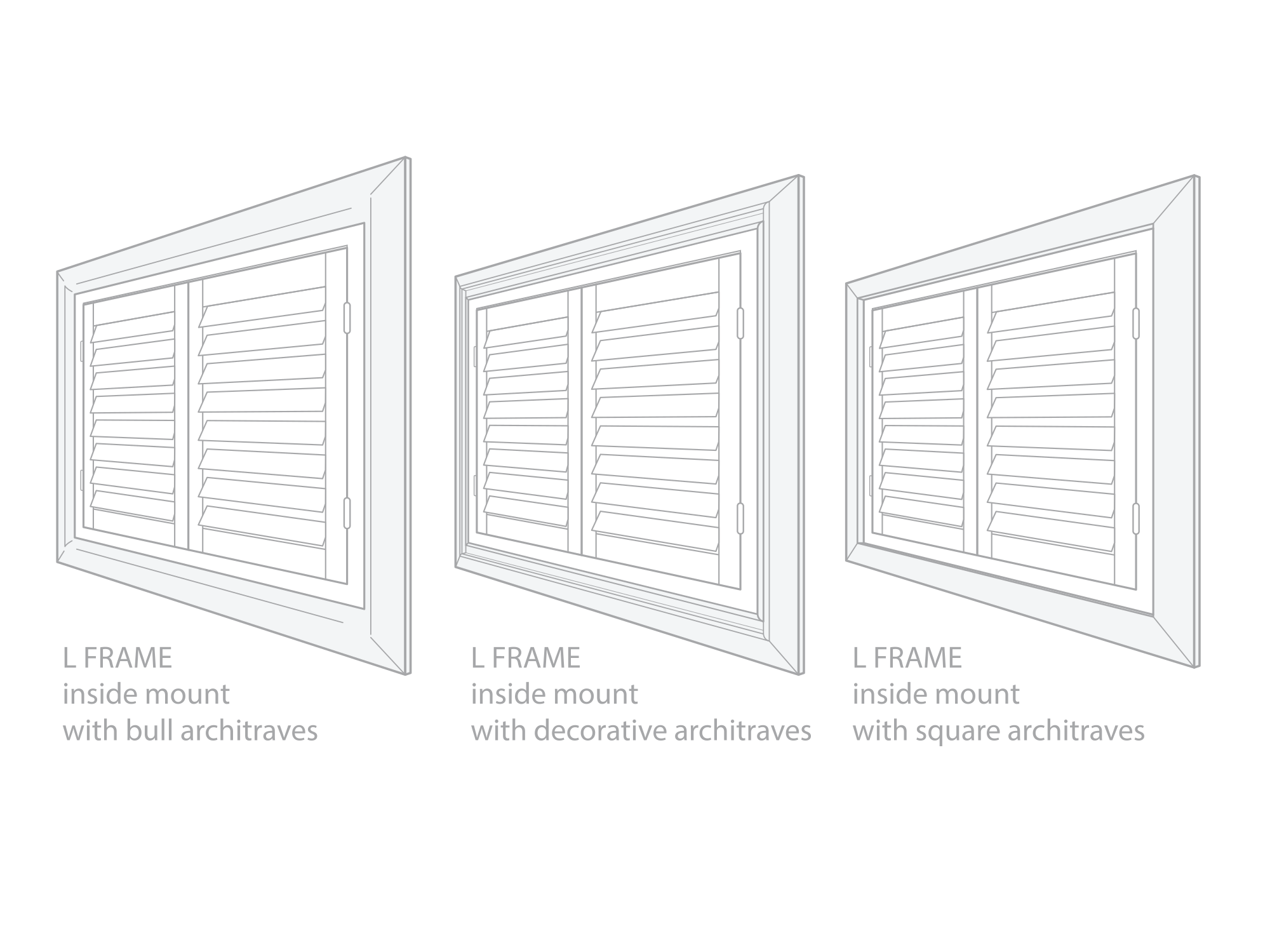
Inside L-frame with architraves
An inside L-frame stays inside the recess, so it can work with virtually any architrave provided the recess has enough depth. It is especially useful when you want decorative trim to remain completely visible.
Outside L-frame with architraves
An outside L-frame fixes to the front face of the architrave. You therefore need a continuous flat band wide enough for secure fixing. Decorative trim can still be suitable if there is a flat central section.
Why is an architrave necessary?
The architrave is primarily a finishing element instead of a structural part of the window. It hides joints around the opening and gives the wall-to-window transition a deliberate, finished look.
For shutters, its workable importance is the surface it provides around the opening and how that surface interacts with the nominated frame.
Did this answer the job question?
Related articles
Need trade support?
Send our trade team the window opening dimensions and photos if anything is unclear about the right shutter setup.